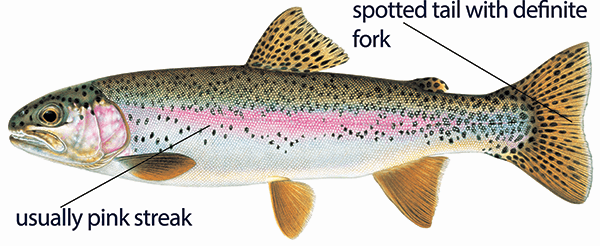
Rainbow trout are a very common type of fish, commonly found in cold-water lakes of North America and Asia, Rainbow trouts are some of the most common fish in the world,
being the celebrity of the entire trout family. While they may only be native to North America and Asia, Rainbow trout are constantly introduced to new areas such as the UK,
where the only native trout there for a while was the brown trout. Rainbow Trout were originally from the Salmo genus, like the brown trout, but them, and other fish from the
Pacific Basin were moved into their own unique genus called the Oncorhynchus. Rainbow trout get their name from the pink stripe on their bodies earning them the alternative
name of "Redbound Trout" in the western basins of the US. Rainbow trout share many similarities of another type of trout called the cutthroat trout, being extremely similar in
color with the only difference being the red stripe on their throat, hence the name. Because of the massive popularity of the rainbow trout for hunting, eating, and sport, the cutthroat
trout is constantly in danger of being snuffed out by the rainbow trout, as the species has been introduced around the world with great success. Rainbow trout are brought into new
ecosystems by a process called, "fishbombing" where a helicopter will literally drop a giant net of rainbow trout in a random lake and they essentially make it their own land. Rainbow
trout are apparently very self-sufficient (we wouldn't use them so often if they weren't) with 70% of rainbow trout bombed lakes having a self-sustaining ecosystem with the fish introduced.
Rainbow trout are similar to their trout brethren, with them usually just eating lake flies which is probably why they sustain themselves extremely well. Rainbow trout are usually the fish you
will find while fishing with the numerous photos of fishermen usually having a trout somewhere. Overall, the rainbow trout is a very common fish (literally John Fish) but still holds an interesting
background and is overall a pretty neat fish to look at.